Concrete Grinding & Leveling
FAQs
Frequently Asked Questions
-
Concrete grinding is typically more affordable than full slab replacement because it corrects surface issues without demolition. There’s no need to remove existing concrete, haul debris, or pour new material. Grinding focuses only on problem areas—such as uneven edges or raised sections—making it faster, less labor-intensive, and more cost-effective.
Not sure which option makes sense for your space?
👉 Contact us for an on-site evaluation and honest recommendation. -
Concrete grinding is ideal when:
You need to eliminate trip hazards or uneven slabs
You’re preparing a surface for tile, wood, epoxy, or coatings
Safety and budget are priorities
Height differences are generally up to 1–1.5 inches
Grinding provides a fast, effective solution without the disruption of replacement.
Have uneven concrete and want to know if grinding will work?
👉 Reach out and we’ll assess it for you. -
A trip hazard is any unexpected change in a walking surface that can cause someone to lose balance. According to OSHA and the Americans with Disabilities Act, a vertical change greater than ¼ inch at a joint, crack, or edge is commonly considered an actionable trip hazard.
-
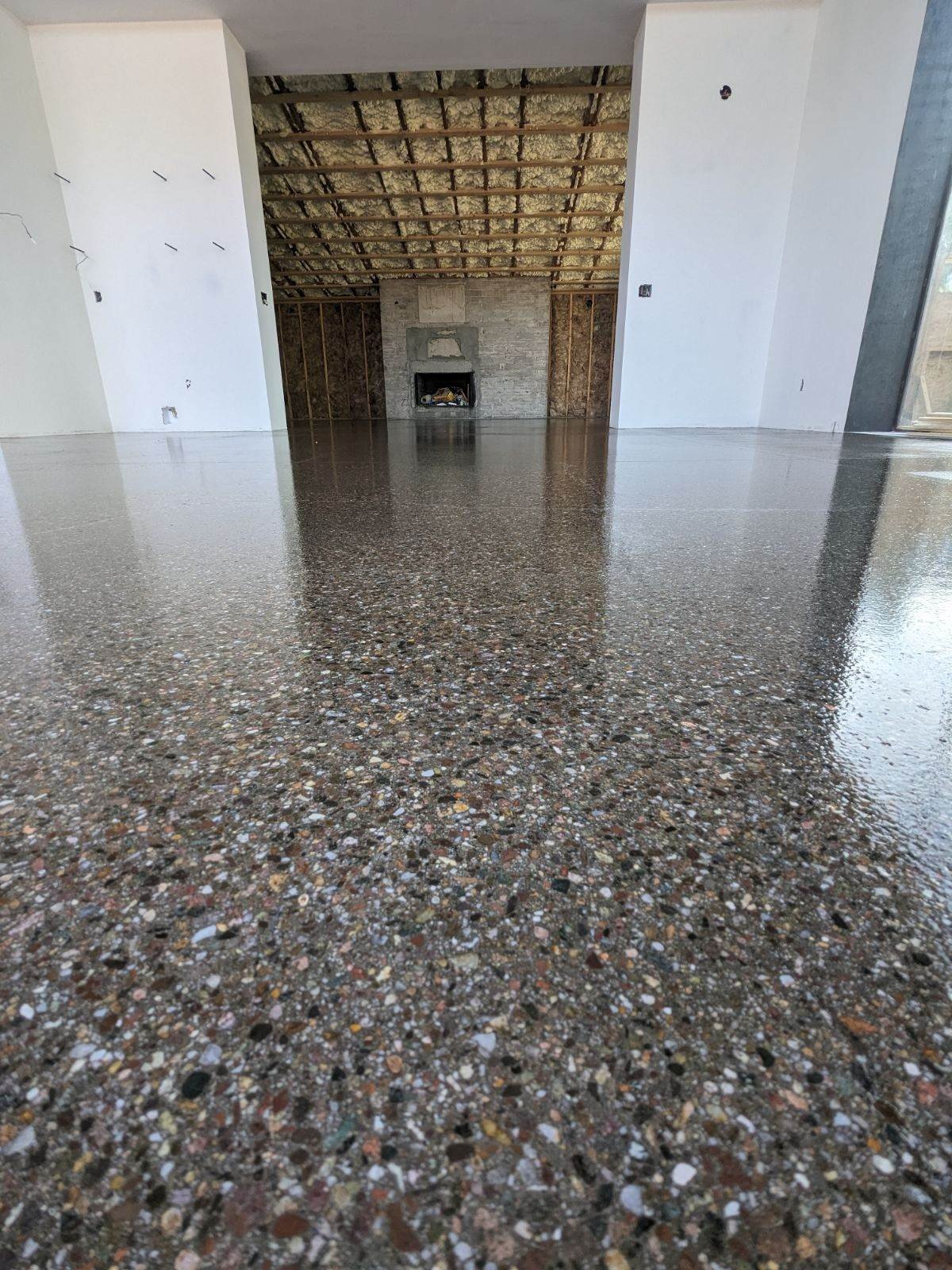
A concrete grind and seal is a two-step process where the surface is mechanically ground using diamond tooling to smooth and clean the concrete, followed by the application of a protective sealer. This sealer improves durability, stain resistance, and appearance while keeping costs lower than full concrete polishing. Grind and seal is commonly used in garages, warehouses, basements, and utility spaces.
👉 See grind-and-seal finishes in our Gallery.
-
Yes. A grind and seal is generally less expensive upfront because it requires fewer grinding passes and less labor. Polished concrete involves multiple grinding and polishing stages to achieve a higher-gloss finish. While polished concrete offers greater long-term durability, grind and seal is a practical option for budget-conscious projects where function and appearance are both important.
👉 Contact us to compare finish options for your space.
-
Yes. Every concrete slab behaves differently due to variations in hardness, age, aggregate, mix design, and density. These factors affect how the concrete cuts, how much material is removed, and which diamond tooling is required. Professional grinding accounts for these differences to avoid uneven results or surface damage.
-
Licensed professionals bring experience, specialized equipment, proper dust control, and safety knowledge to each project. Professional grinding produces smoother results, better coating adhesion, and faster completion while reducing health risks and costly mistakes. DIY grinding often leads to uneven surfaces, tool damage, or the need for rework.
👉 Contact Flatline Concrete Grinding to get it done right the first time.
-
Hiring a professional is especially important for large projects, surfaces with coatings or stains, moisture issues, or when preparing for tile, wood, epoxy, or polished finishes. Professional grinding ensures proper surface preparation, safety compliance, and long-lasting results.
-
A reputable concrete grinding company should be licensed, insured, and communicative, with clear pricing and realistic timelines. They should be able to explain their process, address potential challenges, and provide examples of completed work or customer reviews.
👉 Browse our Gallery to see our workmanship.
-
Concrete is affected by weather exposure, temperature changes, moisture, chemical spills, heavy loads, and subgrade movement. Over time, these factors can lead to cracking, uneven surfaces, and reduced durability.
-
Polished concrete is created by mechanically grinding and polishing a concrete slab with progressively finer diamond abrasives to achieve a smooth, reflective finish. It’s durable, low-maintenance, and popular in both residential and commercial spaces for its modern appearance and longevity.
👉 View polished concrete examples in our Gallery.
-
Yes. Concrete scarifying is a more aggressive surface preparation method that uses rotating carbide cutters to remove thicker coatings, level uneven surfaces, or create texture for new overlays. It removes material more deeply than grinding and is ideal for heavy-duty prep work.
👉 Contact us to determine whether grinding or scarifying is right for your surface.
-
Yes, when the surface conditions allow. Burnishing is a high-speed polishing process that densifies the surface and enhances sheen without exposing aggregate. It improves durability, appearance, and slip resistance by working protective products deeper into the concrete.
Request Service in Your Area
Based in Phoenix and serving projects across Arizona, Flatline Concrete Grinding provides professional concrete grinding and leveling services for residential and commercial properties. Contact us to confirm service availability and discuss your project.